Aura Valley
An environmentally responsive architecture shaped by light, air, and landscape.
Explore the Site
An environmentally responsive architecture shaped by light, air, and landscape.
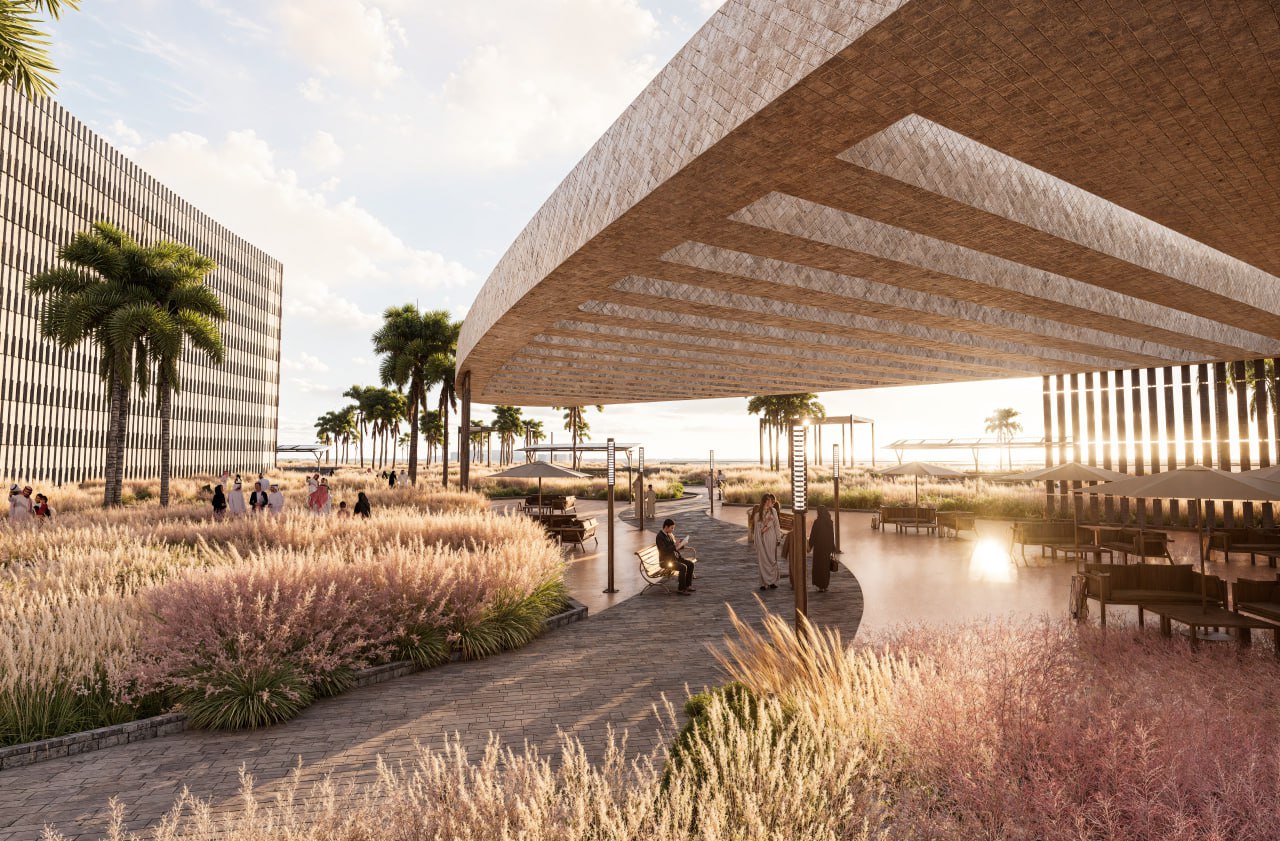
Explore the SiteThe project is driven by a sustainability-first design approach that treats environmental performance as a core architectural generator rather than a secondary layer. The main intent is to reduce energy consumption while enhancing spatial comfort by working with natural forces instead of relying on mechanical systems. Building orientation was carefully considered to maximize natural daylight and encourage passive ventilation, shaping both the form and spatial organization of the project. Landscaping and afforestation are not treated as decorative elements, but as integral components of the architectural concept, contributing to shading, thermal regulation, and environmental quality. The project invites users to experience architecture as a responsive system where built form and nature operate together to create a balanced, climate-aware environment.
The project is situated in a climate-sensitive context where solar exposure and heat accumulation are key environmental challenges. The site conditions informed a design response that prioritizes orientation, shading, and airflow as primary strategies. Extensive landscaping and afforestation were introduced to respond directly to the site’s climatic characteristics, reducing heat absorption and improving microclimatic conditions across the site. Rather than imposing a rigid form, the project adapts to its surroundings by using natural elements to mediate between built spaces and the external environment, creating a more comfortable and environmentally resilient setting.
The program is organized to support sustainable performance and environmental comfort through spatial planning. Spaces are arranged to benefit from optimal daylight exposure and natural ventilation, reducing the need for artificial lighting and cooling. The relationship between built areas and landscaped zones is carefully structured, allowing outdoor elements to actively support indoor environmental quality. Circulation and spatial connections are designed to reinforce this interaction between architecture and landscape, ensuring that sustainability strategies are embedded within the functional layout of the project rather than applied as afterthoughts.